Spring Garden Bed Preparation Checklist for Home Gardeners
Share
Spring garden bed preparation does not need to be complicated. A clear checklist helps you avoid rushing into planting before the soil is ready.
The goal is to prepare beds in a way that supports good drainage, easier root growth, and manageable garden maintenance through the growing season.
1. Clear Old Plant Material
Remove dead stems, large debris, weeds, and leftover plant supports. Keep useful organic matter for composting where appropriate.
2. Check Soil Moisture
Before digging or loosening, check whether the soil is workable. Soil that is too wet can clump and compact. Wait until it is moist but crumbly.
3. Look for Compacted Areas
Walk around the bed and check for hard spots, slow drainage, or crusted surfaces. These are the areas that may need loosening before planting.
4. Loosen Soil Carefully
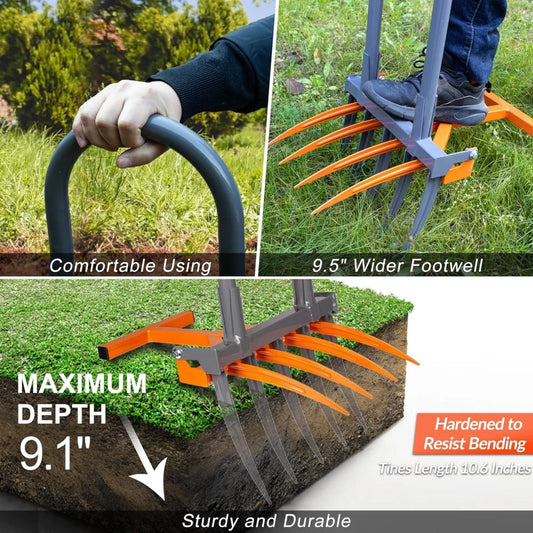
A broadfork can help open compacted areas without fully turning the bed over. Work through the bed section by section, and avoid stepping on loosened soil.
The Heavy Duty 9-Tine Broad Fork Garden Tool with U-Shaped Handle can be useful for spring bed preparation, raised beds, and vegetable garden soil loosening.
5. Add Compost
Spread compost over the bed surface before planting. Compost helps improve soil texture and supports long-term bed health.
6. Plan Plant Spacing
Before planting, check spacing needs. Crowded plants can make watering, weeding, and airflow more difficult later.
7. Mulch After Planting
Mulch helps protect the soil surface, reduce crusting, and keep moisture more stable.
Spring Bed Prep Checklist
- Clear old plant material
- Check soil moisture
- Find compacted areas
- Loosen soil where needed
- Add compost
- Plan spacing
- Mulch after planting
- Keep feet out of the bed
Helpful Related Guides
- Why garden soil feels hard every spring
- Prepare raised beds without turning soil
- Common soil preparation mistakes
- Broadfork buying guide
FAQ
When should I prepare garden beds in spring?
Prepare beds when the soil is workable, not soaking wet or frozen.
Should I till every spring?
Not always. Established beds can often be prepared with compost, mulch, and careful loosening instead of full tilling.
Final Thoughts
Spring bed preparation works best when it is simple and consistent. Clear, check, loosen where needed, add compost, plant carefully, and protect the soil surface.