Common Soil Preparation Mistakes That Make Gardening Harder
Share
Good soil preparation can make planting, watering, weeding, and harvesting easier. Poor soil preparation can do the opposite. It can leave beds compacted, slow-draining, difficult to plant, or harder to maintain through the season.
This guide covers common soil preparation mistakes that make gardening harder and what to do instead.
Mistake 1: Working Soil When It Is Too Wet
Wet soil can smear, clump, and compact. If the soil sticks together in a dense ball, wait before digging or loosening it.
A better approach is to work soil when it is moist but crumbly.
Mistake 2: Turning the Soil Too Aggressively
Repeated aggressive tilling can disrupt soil structure and bring buried weed seeds closer to the surface. Some gardens need major initial work, but established beds often benefit from gentler preparation.
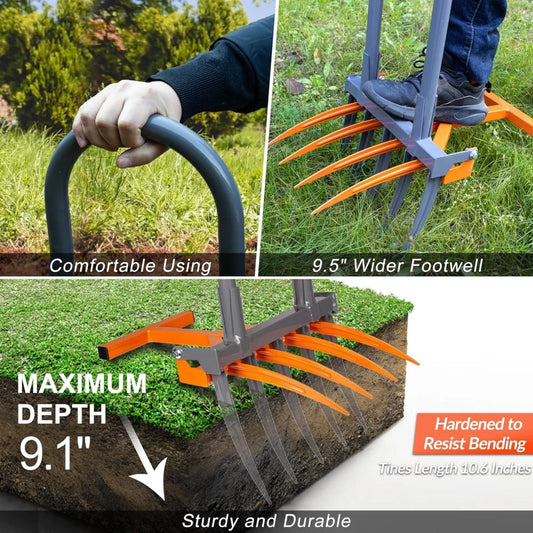
A broadfork can help loosen compacted beds without fully turning the soil over.
Mistake 3: Skipping Compost
Loosening soil helps, but long-term improvement usually needs organic matter. Compost improves soil texture, moisture behavior, and workability over time.
Mistake 4: Walking on Garden Beds
Foot traffic is one of the fastest ways to compact soil again. Use paths around beds and avoid stepping on planting areas after loosening them.
Mistake 5: Ignoring Drainage
If water sits too long after rain, soil preparation alone may not solve the problem. Check low areas, compacted spots, clay-heavy soil, and bed layout.
Mistake 6: Using the Wrong Tool
A shovel, garden fork, broadfork, rake, and tiller all solve different problems. If your goal is to loosen compacted garden beds with less disturbance, a broadfork may be more suitable than aggressive digging.
The Heavy Duty 9-Tine Broad Fork Garden Tool with U-Shaped Handle is one option for gardeners who want a manual soil-loosening tool for raised beds and vegetable gardens.
Mistake 7: Leaving Soil Bare
Bare soil can crust, dry out, erode, and compact under heavy rain. Mulch helps protect the surface and keeps beds easier to manage.
Better Soil Preparation Checklist
- Wait for workable soil moisture
- Clear bed debris
- Loosen only where needed
- Add compost
- Use mulch after planting
- Keep feet out of beds
- Use the right tool for the task
Helpful Related Guides
- How to loosen compacted soil in a vegetable garden
- Broadfork vs tiller
- How to aerate garden soil without damaging structure
- Spring garden bed preparation checklist
Frequently Asked Questions
What is the biggest soil preparation mistake?
Working soil when it is too wet is one of the most common mistakes because it can create clumps and compaction.
Should I till my garden every year?
Not always. Established beds may only need compost, mulch, and careful loosening where compacted.
Can a broadfork help fix soil preparation mistakes?
It can help loosen compacted areas, but long-term improvement also needs compost, mulch, and less foot traffic.
Final Thoughts
Better soil preparation is usually simple: work soil at the right time, avoid overworking it, add compost, protect the surface, and keep weight off the bed.