No-Till Gardening Tools: What You Actually Need to Start
Share
No-till gardening does not mean doing nothing to your soil. It means preparing and improving garden beds with less aggressive turning and less disruption than repeated deep digging or heavy tilling.
The right tools can help you build soil gradually, keep beds organized, and make planting easier without overcomplicating the process.
Start with Compost
Compost is one of the most important parts of a no-till garden. It is usually added on top of the bed, where it helps improve the soil over time.
Use Mulch to Protect the Soil
Mulch helps cover the soil surface, reduce crusting, limit erosion, and keep moisture more stable.
Keep a Rake for Surface Work
A rake helps level compost, spread mulch, and tidy the surface without deep digging.
Use Hand Tools for Planting
A trowel, hand fork, pruners, and garden gloves are enough for many planting and maintenance tasks.
Use a Broadfork for Compacted Beds
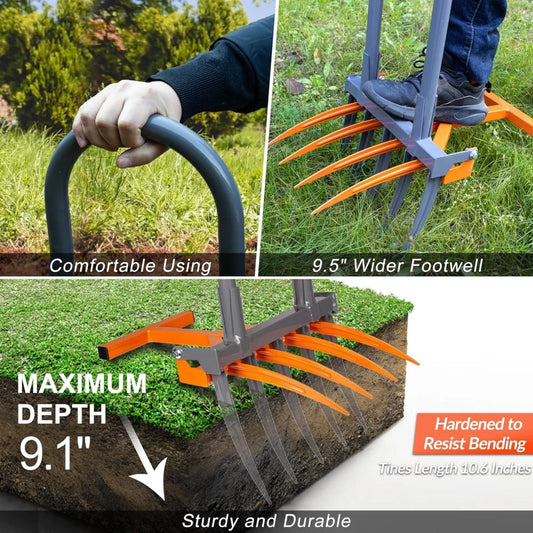
A broadfork is useful when soil needs loosening but you do not want to fully turn the bed over. It can help open compacted soil while keeping more of the bed structure in place.
The Heavy Duty 9-Tine Broad Fork Garden Tool with U-Shaped Handle is a practical broadfork option for home gardeners preparing vegetable beds and raised beds.
Useful No-Till Tool List
- Compost
- Mulch
- Rake
- Hand trowel
- Hand fork
- Pruners
- Broadfork
- Watering can or hose
What You May Not Need at First
Many beginners do not need a powered tiller, large tool collection, or complicated soil amendments before they understand their garden.
Helpful Related Guides
- Broadfork vs tiller
- Prepare raised beds without turning soil
- Common soil preparation mistakes
- What is a 9-tine broadfork?
FAQ
Is a broadfork a no-till tool?
It is often used in reduced-till and no-till systems because it loosens soil with less turning than a tiller.
Can I start no-till gardening in compacted soil?
Yes, but compacted beds may need gradual improvement with broadforking, compost, mulch, and reduced foot traffic.
Final Thoughts
No-till gardening works best with simple, repeatable habits. Start with compost, mulch, hand tools, and a broadfork if your beds need loosening.