What Is a 9-Tine Broadfork and Why Gardeners Use It for Soil Prep
Share
A 9-tine broadfork is a manual garden tool designed to loosen compacted soil, aerate garden beds, and prepare planting areas without turning the soil as aggressively as a powered tiller or repeated deep digging.
It is commonly used by vegetable gardeners, raised bed gardeners, and no-till or reduced-till gardeners who want to improve soil structure while keeping garden beds easier to manage.
This guide explains what a 9-tine broadfork does, why gardeners use it, and how it fits into practical soil preparation.
What a Broadfork Does
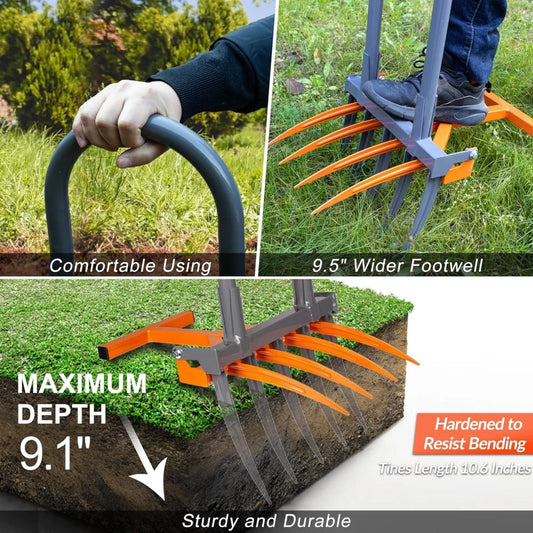
A broadfork uses several long metal tines attached to a handle frame. You step on the tool, press the tines into the soil, then pull the handles back to lift and loosen the soil. The goal is not to flip the bed upside down. The goal is to open the soil so air, water, and roots can move more easily.
A broadfork is useful for:
- Loosening compacted garden beds
- Aerating soil before planting
- Refreshing raised beds
- Preparing vegetable beds
- Reducing reliance on powered tillers
Why 9 Tines Matter
A 9-tine broadfork covers a wider working area than a narrow fork. More tines can help loosen a broader strip of soil in each pass, which is useful when working along garden rows or raised beds.
Tine count matters because it affects working width, soil contact, and how quickly you can move through a bed. For home gardeners with vegetable beds, a 9-tine design can be practical when preparing several planting areas before the growing season.
When a 9-Tine Broadfork Is Useful
A broadfork is most useful when the soil is firm but workable. It can help when garden beds feel compacted, water drains slowly, or roots have trouble moving through the soil.
It is especially relevant for:
- Spring garden bed preparation
- Raised bed refreshing
- Vegetable garden soil loosening
- Reduced-till gardening
- Clay-heavy or compacted areas that need gradual improvement
If your main issue is hard soil, read our related guide on struggling with compacted garden soil.
What a Broadfork Can and Cannot Do
A broadfork can help loosen and aerate soil, but it is not a magic fix for every soil problem. Poor soil structure often needs repeated improvement with compost, mulch, organic matter, drainage management, and better foot traffic habits.
A broadfork is not ideal for extremely rocky soil, very wet soil, or large-scale land clearing. It works best as part of a practical soil-care routine.
Where the Homiva 9-Tine Broadfork Fits
The Heavy Duty 9-Tine Broad Fork Garden Tool with U-Shaped Handle is designed for gardeners who want a manual soil-loosening tool for garden beds, raised beds, and vegetable growing areas.
It is best viewed as a serious garden tool for soil preparation, not a shortcut that removes all effort. Used correctly, it can support healthier soil preparation and make compacted beds easier to work over time.
Helpful Related Guides
- Heavy duty broadfork benefits
- Broadfork vs tiller for garden beds
- Broadfork buying guide
- How to loosen compacted soil in a vegetable garden
Frequently Asked Questions
What is a 9-tine broadfork used for?
It is used to loosen and aerate compacted soil in garden beds without fully turning the soil over.
Is a broadfork the same as a garden fork?
No. A broadfork is wider, usually has two handles or a broad handle frame, and is designed for loosening larger sections of soil.
Can a broadfork replace a tiller?
For some home garden beds, yes. For large areas or new ground, a tiller may still be faster. The right tool depends on the task.
Final Thoughts
A 9-tine broadfork is useful for gardeners who want to loosen soil, prepare beds, and support reduced-till gardening. It works best when combined with compost, mulch, and careful garden bed management.