Broadfork vs Garden Fork: What’s the Difference?
Share
A broadfork and a garden fork can both help with soil work, but they are not the same tool. A garden fork is usually narrower and more versatile for digging, lifting, and turning small sections of soil. A broadfork is wider and designed mainly for loosening and aerating soil across garden beds.
This guide explains the practical differences so you can choose the right tool for your garden.
What Is a Garden Fork?
A garden fork is a hand tool with several strong tines and a single handle. Gardeners use it for digging, lifting plants, turning compost, loosening small areas, and breaking up clumps.
It is useful for:
- Small digging jobs
- Turning compost
- Lifting root crops
- Working around individual plants
- Loosening small patches of soil
What Is a Broadfork?
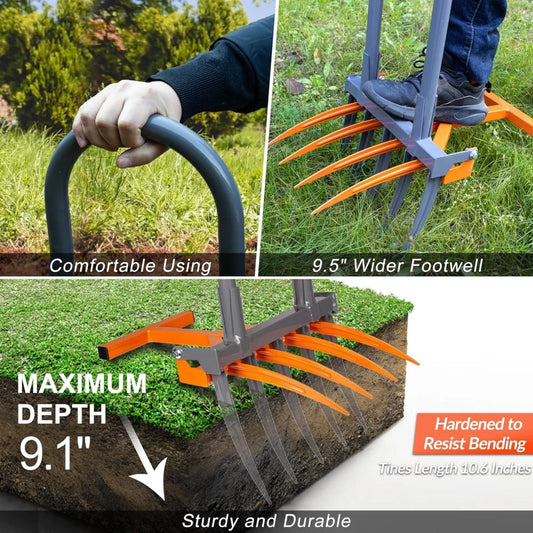
A broadfork is wider and usually has two handles or a broad handle frame. It is designed to loosen a wider strip of soil by pushing long tines into the ground and pulling back to lift the bed.
It is useful for:
- Loosening compacted garden beds
- Aerating vegetable beds
- Refreshing raised beds
- Reduced-till soil preparation
- Working across wider planting areas
Main Differences
| Feature | Broadfork | Garden Fork |
|---|---|---|
| Width | Wider | Narrower |
| Best use | Loosening beds | Digging and lifting |
| Soil disruption | Lower when used correctly | Can turn soil more |
| Control | Two-handed leverage | Single-handle control |
| Best garden size | Beds and rows | Small areas and detailed work |
Which Is Better for Compacted Soil?
For larger compacted beds, a broadfork is often more practical because it covers more area and opens the soil from below. For small compacted spots, a garden fork may be enough.
Which Is Better for Raised Beds?
A broadfork is often useful for refreshing raised beds without turning the entire bed over. A garden fork is useful for smaller adjustments, planting holes, and compost work.
Product Fit
The Heavy Duty 9-Tine Broad Fork Garden Tool with U-Shaped Handle is designed for broader soil-loosening work in garden beds, vegetable beds, and raised beds.
Helpful Related Guides
FAQ
Do I need both a broadfork and a garden fork?
Not always. A broadfork is better for bed-wide loosening. A garden fork is better for smaller digging and lifting tasks.
Can a garden fork replace a broadfork?
For small areas, sometimes. For wider beds and compacted rows, a broadfork is usually more efficient.
Final Thoughts
A garden fork is a versatile digging tool. A broadfork is a soil-loosening tool for beds and rows. If your main goal is aerating compacted garden beds, a broadfork is usually the more suitable choice.